Meaningful Ways to Display Photos and Keepsakes at a Memorial
July 27, 2026
The most meaningful memorial displays are simple, personal, and easy for guests to understand without explanation. Families planning cremation services in Bernalillo, NM often ask us what to bring, how much is too much, and how to avoid making the display feel like a school project. We usually suggest choosing a few strong themes from a loved one’s life, then using photos and keepsakes to help people remember, talk, and feel connected.
Start with the Story, Not the Table
Before choosing frames or decorations, we like to ask, “What do you want people to feel when they walk up?” That answer guides everything. A display for a lifelong gardener should feel different from one for a veteran, teacher, quilter, rancher, musician, or grandparent who never missed a basketball game.
One common mistake is trying to show every chapter with equal weight. That can turn a tribute into visual clutter. A better approach is to choose three or four parts of life that mattered most, such as family, work, service, hobbies, and faith.
This also helps when several relatives want to contribute. Instead of saying yes to every item, we can help families sort things into “display,” “private family keepsake,” and “save for a later gathering.” That small step often prevents hurt feelings.
Choose Photos That Help People Remember Out Loud
The best photos are not always the most formal ones. A perfect portrait may look beautiful, but a picture of Dad holding a fishing pole with muddy boots may start the story everyone needs to hear. Memorial photos should invite conversation, not just admiration.
We suggest using a mix of ages and relationships. Include childhood, young adulthood, family gatherings, friendships, work life, and quiet everyday moments. Guests often find comfort in seeing the whole person, not only the final years.
A non-obvious tip: avoid using only large group photos unless the loved one is easy to spot. At a service, guests may have only a few seconds to look while others wait behind them. Close, clear photos usually have more emotional impact.
If you are making a slideshow, keep the table display different from the screen. Repeating the same photos in both places can make the tribute feel flat. Use the table for tactile memories, and let the slideshow carry the timeline.
Keepsakes Work Best When They Have A Clear Reason
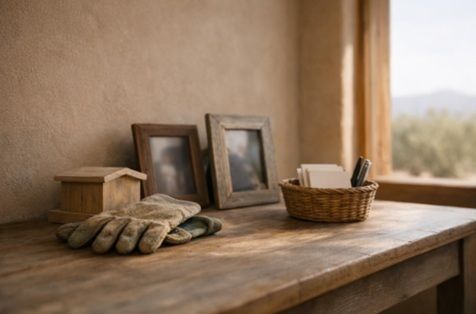
Keepsakes should answer a quiet question: “What did this person love, make, wear, use, or give?” A Bible with handwritten notes, a recipe card, a military cap, a pair of gardening gloves, a bowling shirt, or a well-used guitar pick can say more than a dozen decorations.
We recommend placing small cards beside certain items, especially when the meaning is not obvious. A note that says, “She made this quilt for her first grandchild,” helps guests understand why the object matters. Without that context, meaningful pieces can look like random belongings.
Be careful with items that could be bumped, borrowed, or damaged. If something is irreplaceable, we can help think through safer placement. Sometimes a photograph of the item is the wiser choice, especially for heirlooms, fragile art, handwritten letters, or jewelry.
For families blending cremation with long-held customs, it may help to read about cremation and family traditions that create a meaningful goodbye. It can bring language to decisions that feel hard to explain.
A Gentle Scenario Families Often Recognize
Imagine a family honoring a mother who loved cooking, singing in church, and caring for grandchildren. Her children arrive with six boxes of photo albums, framed portraits, cookbooks, choir music, aprons, cards, and holiday decorations. Everything feels important because grief makes every object feel like proof of love.
Instead of filling every surface, the family chooses one framed portrait, twelve printed photos, her favorite apron, a handwritten biscuit recipe, and a small stack of hymnals. They add a short note inviting guests to write down a favorite meal she made. The display becomes warm and focused.
That choice changes the room. Guests do not just pass by and nod. They laugh about Sunday dinners, remember her voice, and leave written stories the family can keep.
Make the Display Easy to Move Through
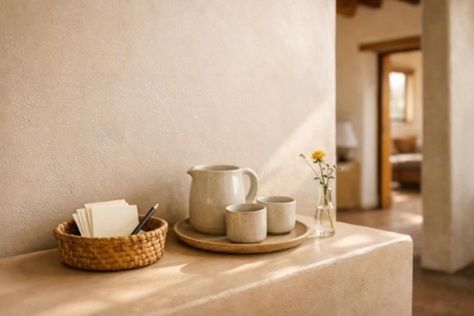
A memorial display should work with the flow of the room. If it is placed where people enter, sign the register, and greet the family, it can create a gentle pause. If it blocks a walkway, guests may feel rushed or awkward.
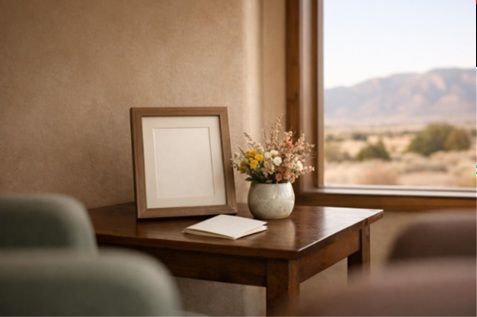
Height matters more than many families expect. Use frames, risers, easels, or stands so people are not bending over to see everything. Flat items, like letters or medals, are easier to view when angled slightly.
Lighting also matters. Glossy photos under bright lights can reflect glare, while dark corners hide details. If you are unsure how many items will fit well, call French Funerals & Cremations at (505) 338-2000 and ask how to prepare photos and keepsakes for the space being used.
Protect Fragile Items Without Hiding Them
Families often bring treasured items wrapped in towels, boxes, or envelopes, then worry about leaving them out. That concern is reasonable. Memorial gatherings can be busy, with children, hugs, flowers, and movement through the room.
For delicate pieces, we suggest using shadow boxes, clear sleeves, stands, or covered frames when possible. For old photographs, copies are often better than originals. A scanned and reprinted image can be displayed without risking the only copy.
Another practical insight: assign one family member to gather keepsakes immediately after the service. Not the person receiving the most condolences, and not someone likely to be pulled into every conversation. This simple plan prevents items from being misplaced during an emotional day.
Include People Who Cannot Attend
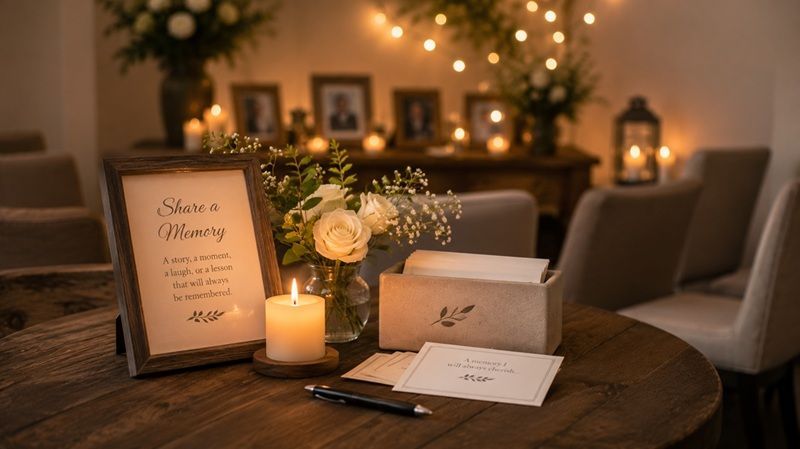
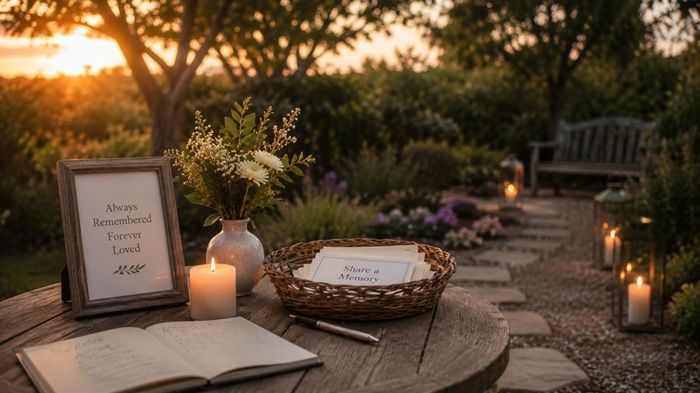
Photo and keepsake displays can also serve relatives and friends who live far away or cannot travel. Ask them to send one photo with a short memory, not twenty files without context. A smaller number of thoughtful contributions is easier to include and more meaningful to read.
You might print these memories and place them in a basket, binder, or board near the display. This gives out-of-town loved ones a presence in the room. It also helps local guests see sides of the person they may not have known.
For a virtual or recorded service, choose a few display items to show on camera before or after the ceremony. Do not assume online guests can see the table clearly from across the room. A close, steady view makes a real difference.
When Less Is More
There are times when a smaller display is the kindest choice. If the family is exhausted, if relationships are strained, or if decisions are becoming painful, it is enough to choose one portrait and one meaningful item. A tribute does not need to be large to be loving.
Waiting until the last minute usually makes the process harder. Families may end up bringing too much, forgetting key items, or choosing photos while tired and overwhelmed. Starting early allows room for thought, especially when siblings or relatives need to agree.
Pre-planning can help here, too. Some people leave a folder of favorite photos, military details, music choices, or notes about what they do not want displayed. That guidance can be a quiet gift to family later.
Let the Display Support the Service, Not Carry It Alone
Photos and keepsakes are there to open the door to memory. They do not have to explain a whole life by themselves. Spoken stories, music, prayer, silence, and gathering together all share that work.
If you are unsure what to include, begin with what feels honest. Choose items that show love, character, humor, devotion, or service. Leave out anything that feels performative or confusing.
At French Funerals & Cremations, we can help families think through what to bring, how to arrange it, and how to keep the tribute respectful and manageable. If you are planning cremation services in Bernalillo, NM, call (505) 338-2000 and we will help you shape a display that feels personal without adding extra weight to an already tender time.