How Funeral Directors Coordinate Meaningful Military Funeral Honors
October 27, 2026
Military funeral honors are most meaningful when they are carefully woven into the family’s larger plan for remembrance. Families working with funeral homes Albuquerque, NM can ask early about the information needed, the likely timeline, and how the honors observance will fit with the service they have chosen.
Key Takeaways
- Military honors are requested through the appropriate channels and should be confirmed before final service details are shared.
- Service documentation, ceremony preferences, and location details all affect planning.
- Honors can be coordinated with burial, cremation, memorial, visitation, or graveside arrangements.
- Clear day-of cues help protect the dignity of the observance and give relatives time together afterward.
When Military Honors Are Requested
A funeral director begins as a coordinator, listening to what the family hopes the farewell will include and explaining that military honors are arranged through the appropriate channels. The first conversation is not only about the ceremony itself. It also helps identify decisions that shape the entire timeline, including where the gathering will occur, whether there will be a burial or cremation, and when relatives can reasonably arrive.
Early planning matters because military participation and ceremony timing should be confirmed rather than assumed. A family may want honors at a graveside service, after a chapel funeral, or as part of a memorial gathering. Each choice affects travel time, guest communication, and the order of events.
French Funerals & Cremations can help families organize these details in a way that keeps the focus on the person being honored, rather than on last-minute logistics.
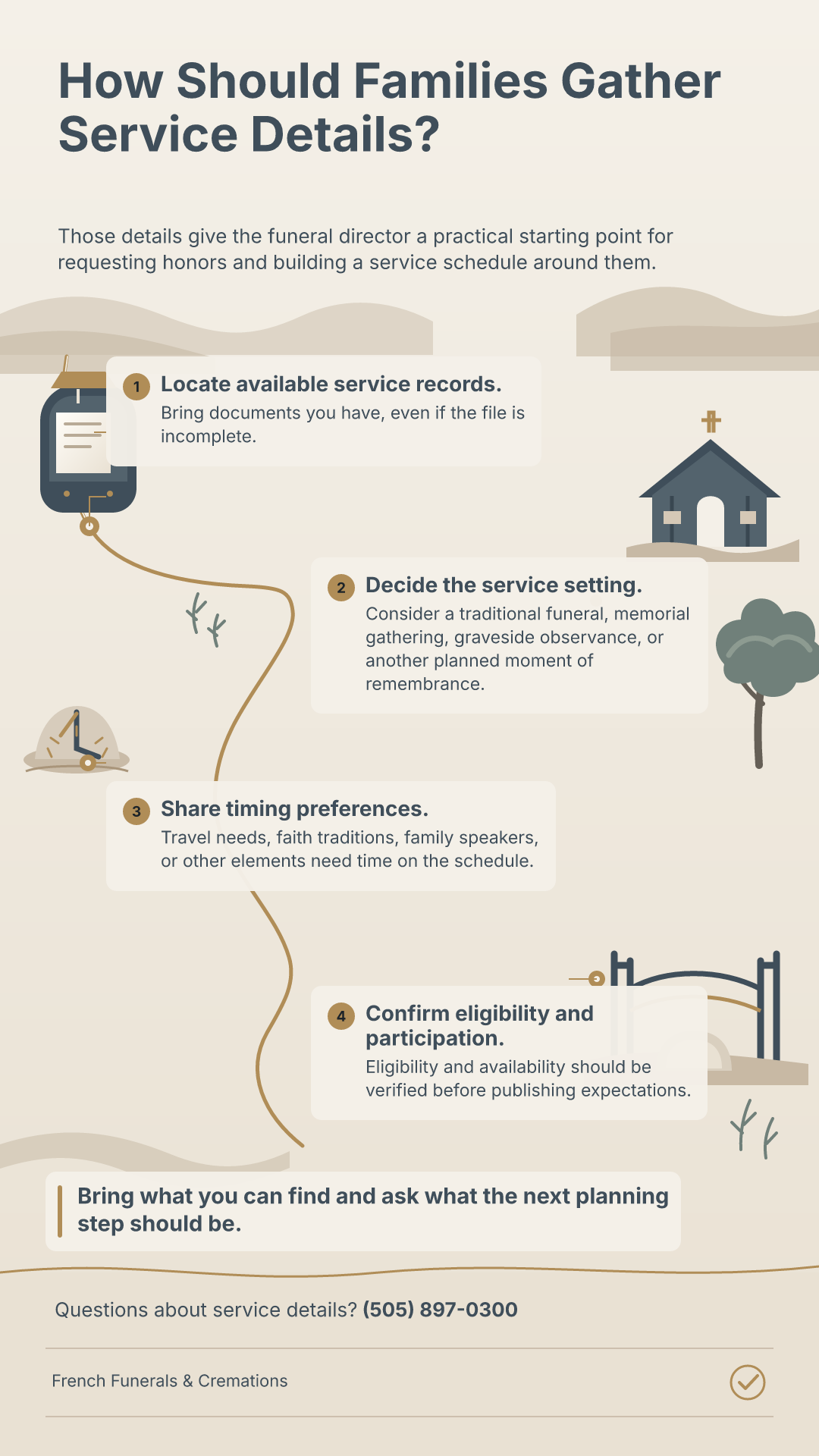
How Should Families Gather Service Details?
Families should bring any available military discharge or service documentation, along with their preferred ceremony date, location, and type of gathering. Those details give the funeral director a practical starting point for requesting honors and building a service schedule around them.
- Locate available service records. Bring the documents you have, even if the file is incomplete. The funeral director can explain what information may be useful and what should be confirmed through the appropriate channels.
- Decide the service setting. Consider whether honors are desired at a traditional funeral, a memorial gathering, a graveside observance, or another planned moment of remembrance. The setting affects space, arrival patterns, and the sequence of the ceremony.
- Share timing preferences. Tell the funeral director about travel needs, faith traditions, family speakers, or other elements that need time on the schedule. A preferred time is helpful, but it may need adjustment after participating parties confirm availability.
- Confirm eligibility and participation. Military honors are a valued recognition of service, but eligibility and availability should be verified. Confirming early prevents a family from publishing expectations that later need to change.
If a loved one’s service record is difficult to locate, do not let that stop the conversation. Bring what you can find and ask what the next planning step should be.
How Do Honors Fit Funeral Plans?
Military honors can be placed within many types of funeral plans, but the best placement depends on the flow of the day. A director coordinates the requested observance with the family’s chosen service so that neither feels rushed or treated as an afterthought.
For a burial, honors may follow the funeral service at the cemetery. The schedule needs to account for the procession, guest arrival, and the time required to gather everyone before the formal observance begins. For a cremation-based memorial, honors may be included at the memorial gathering or at a later committal or placement ceremony, depending on the family’s plans.
A visitation before the service may require a separate arrival plan for participants. A memorial held on another day can offer more flexibility, but confirmation is still essential before invitations are sent. Families planning a cremation celebration of life may also choose a quieter military observance before or after the larger gathering.
The key is to preserve room for meaning. Formal honors have their own rhythm, while a eulogy, prayer, music selection, or personal farewell also deserves unhurried attention.
What Details Shape the Ceremony?
Location, timing, guest movement, and the family’s preferred ceremony order all influence how military honors fit into the day. The comparison below shows why the same observance may need a different plan in different settings.
A funeral director can explain the practical effect of each choice before the family commits to a schedule. That guidance may be especially helpful when relatives are traveling or when several meaningful elements need to happen on the same day.
Confirm Timing Before Announcements
Final service information should not be published until the ceremony sequence and participating parties are confirmed. Families understandably want to notify relatives quickly, but a tentative time can create confusion if military honors need to occur earlier, later, or in a different location than first expected.
The funeral director helps turn separate pieces into one clear schedule. That includes the start of the funeral or memorial, when guests should move to the next location, when honors are anticipated, and what family members should expect immediately afterward. If plans must change, a clear communication plan helps reduce the burden on one grieving relative who might otherwise be answering calls throughout the day.
It is also wise to distinguish between the service start time and the formal honors time. Guests who arrive only for the observance need accurate guidance, while close family may need to arrive earlier for private time and final instructions.
Relatives who cannot attend can still be included with thoughtful support. Families may find guidance in supporting loved ones from afar, especially when travel or health makes attendance difficult.
At the Service, Every Transition Matters
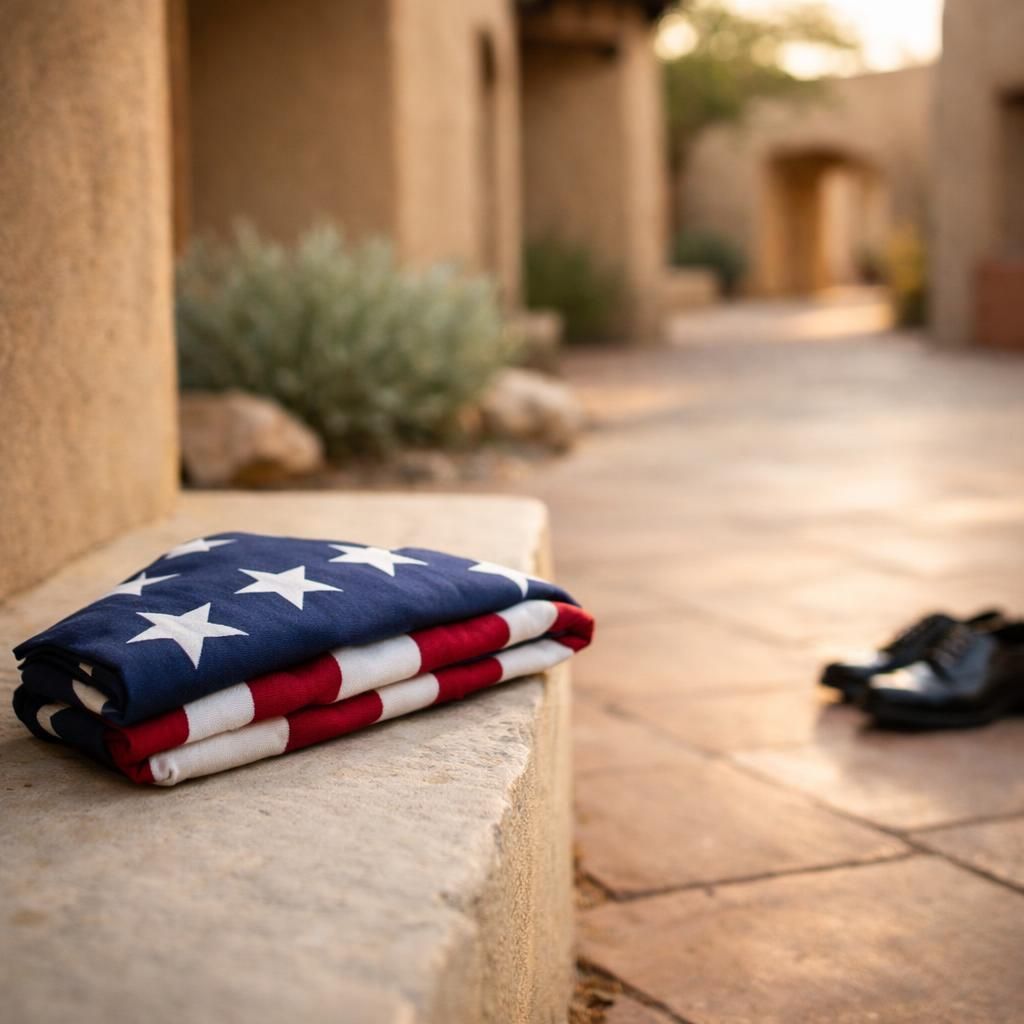
On the day of the service, a funeral director manages the details that families should not have to carry. That can include coordinating arrivals, guiding participants to the appropriate place, helping guests understand where to stand or sit, and cueing the movement from the funeral service to the honors observance.
The transition is important. A chapel service may end with family members leaving first, followed by guests who are invited to gather outside or proceed to the cemetery. At a graveside service, the director may help hold the moment until key relatives are present and the ceremony can begin with proper attention.
After the formal observance, the family may need quiet space before greeting guests, traveling to a reception, or continuing with private plans. A respectful schedule leaves room for that pause. The director’s role is to keep the day organized so relatives can focus on remembrance, gratitude, and one another.
Families who are also arranging the broader ceremony can review available funeral service options as they decide how military honors will fit into the day.
Questions to Raise During Planning
Bring these questions to the planning conversation so the details can be addressed before the schedule is finalized:
- What service documents should we provide to request military honors?
- Where in the ceremony would honors feel most appropriate for our family?
- What timing details need confirmation before we notify guests?
- How should guests move from the service to the honors observance?
- Who will communicate updates if the ceremony time changes?
- Is there time afterward for immediate family to gather privately?
These questions do not make the process more complicated. They help the funeral director anticipate the details that can otherwise become stressful when the day is already emotionally full.
Choosing one person this week to gather available service documents and family preferences can make the next conversation much easier. As you compare funeral homes Albuquerque, NM, French Funerals & Cremations can help you talk with our team about coordinating a respectful military tribute. Call (505) 897-0300 to discuss the next steps