How Direct Cremation Helps Families Plan a Farewell at Their Pace
November 9, 2026
Key Takeaways
- A simple cremation arrangement does not prevent a family from holding a memorial later.
- A later gathering can give relatives time to travel, talk, and take part in decisions.
- The farewell can be formal, informal, private, faith-based, or centered on shared stories.
- Personal details, not a fixed schedule, often give a memorial its meaning.
- Asking clear questions early helps protect flexibility for the days ahead.
Direct Cremation Does Not End the Farewell
Choosing a simple cremation arrangement does not mean a family must give up a meaningful goodbye. Families looking into cremation services Albuquerque, NM can separate two decisions that are often mistakenly treated as one: the care arrangements made after a death and the gathering held to remember the person.
The cremation arrangement addresses what happens in the immediate days following a death. A memorial, celebration, prayer service, reception, or private time of remembrance is a separate choice. It may happen later, after family members have had time to absorb the loss and decide what kind of farewell feels right.
This distinction matters when relatives are spread out, when a family needs time to talk through traditions, or when no one feels ready to make every decision at once. A simple arrangement may reduce the pressure of an immediate service without making the person’s life feel less worthy of recognition.
A later farewell can still include the people, readings, music, food, photos, rituals, and stories that matter most. The timing changes, but the opportunity to honor someone remains.
Can Families Gather After Cremation?
Yes. Families may gather after cremation, and a memorial does not have to occur beforehand to be meaningful. The key is to discuss the family’s wishes and practical needs with the provider while arrangements are being made.
Some families need several days or longer to reach relatives who live elsewhere. Others want time to choose a place, decide who should speak, or include a faith leader or community group. Holding the remembrance later can allow those decisions to come from conversation rather than from the pressure of an immediate deadline.
A later service also gives family members different ways to participate. One person may collect photographs. Another may contact guests, prepare favorite food, select music, or write down stories shared by grandparents, friends, and coworkers. These tasks can become part of the grieving process when no one person has to carry them all at once.
The gathering does not need to look like a traditional funeral. It can be a small family meal, a chapel memorial, a community gathering, or a quieter time with a few close people. For ideas on shaping a gathering around the person rather than a rigid format, read about a cremation celebration of life.
A later farewell is especially helpful when the family agrees on the need to remember but has not yet agreed on the details. Time can make room for both.
Timing Becomes a Family Decision
A later memorial can shift the question from “What must happen right now?” to “What would help us remember well?” That change can be a relief when grief, travel, work, caregiving, or differing family expectations make immediate planning difficult.
It does not mean every decision should be delayed. Families should still talk through the care arrangement, required paperwork, how remains will be transferred, and where they will be kept until the memorial plans are settled. Clear answers on those points can prevent confusion later.
After those immediate matters are handled, relatives can decide whether they want a gathering soon, after more people can attend, or on a meaningful date. There is no single timetable that fits every family. A shorter wait may suit relatives who need the comfort of being together promptly, while a longer period may help people coordinate participation thoughtfully.
The important part is to name the decision-maker and keep communication simple. One shared plan, even if it is brief, helps avoid crossed messages during a tender time.
What Can a Later Memorial Include?
Different formats can serve different needs after cremation. This comparison may help a family talk about what feels most fitting without treating any one option as the required choice.
A format can also be combined with another. A short service may be followed by a meal, or a small gathering may include a few readings and a slideshow. The best choice is usually the one that gives the people closest to the loss a genuine way to participate.
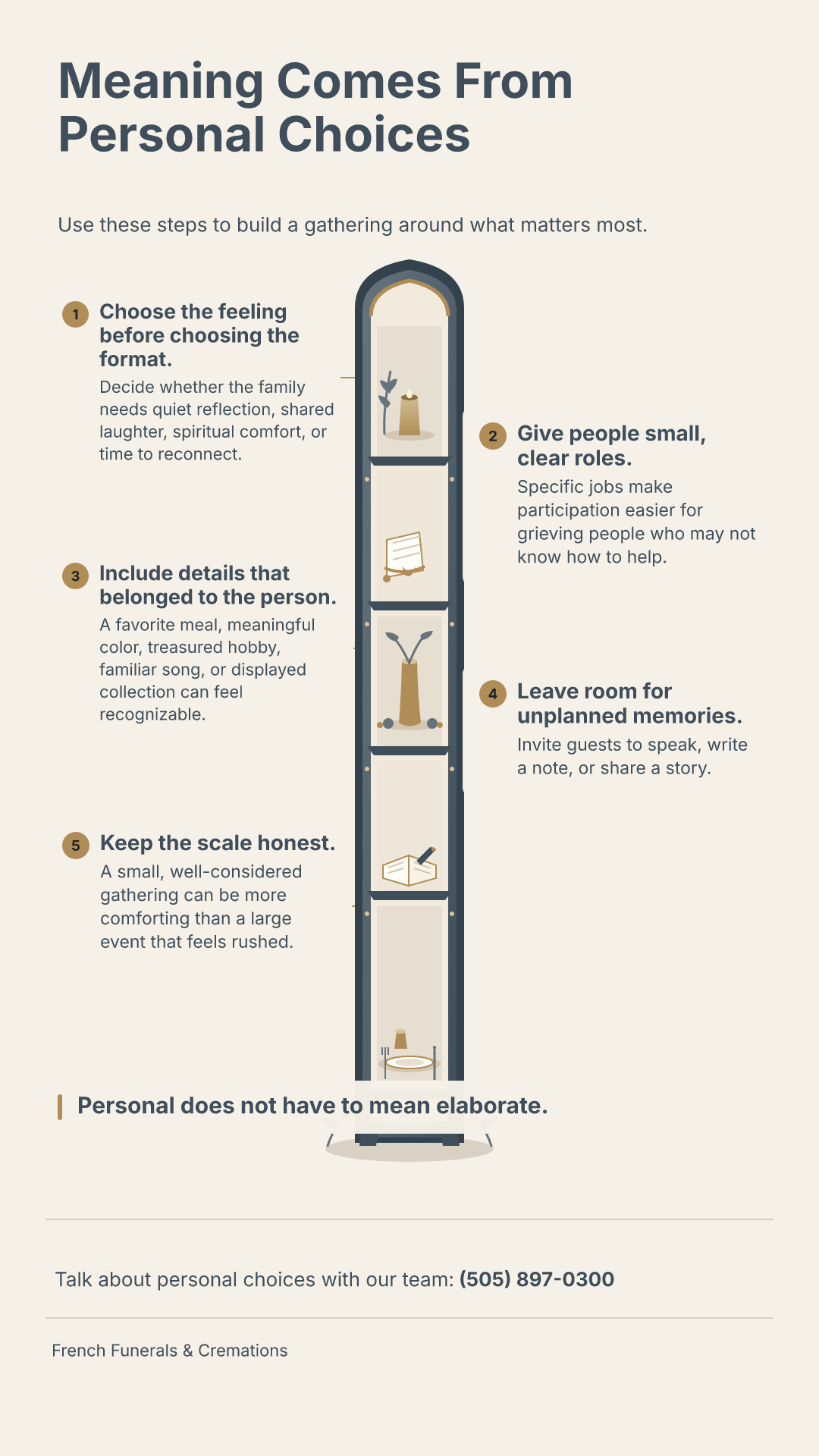
Meaning Comes From Personal Choices

A simple cremation arrangement can still lead to a deeply personal memorial because meaning comes from the choices a family makes afterward. You do not need an immediate formal service for people to recognize a loved one’s character, relationships, and place in the family.
Use these steps to build a gathering around what matters most.
- Choose the feeling before choosing the format. Decide whether the family needs quiet reflection, shared laughter, spiritual comfort, or time to reconnect. That answer can guide the setting, music, and guest list better than starting with a formal template.
- Give people small, clear roles. Ask one relative to gather photos, another to collect written memories, and another to welcome guests. Specific jobs make participation easier for grieving people who may not know how to help.
- Include details that belonged to the person. A favorite meal, a meaningful color, a treasured hobby, a familiar song, or a displayed collection can make the gathering feel recognizable. French Funerals & Cremations has hosted a dinner party-themed memorial at Wyoming & San Antonio, showing how a shared meal can become part of the tribute rather than just an event after it.
- Leave room for unplanned memories. A simple invitation for guests to speak, write a note, or share a story can bring forward details the immediate family may not have known.
- Keep the scale honest. A small, well-considered gathering can be more comforting than a large event that feels rushed. Families planning a close gathering may find guidance in making a small memorial feel personal.
Personal does not have to mean elaborate. It means the farewell reflects the person who died and gives those who loved them a real place in the remembrance.
Questions to Ask Before Making Arrangements
Before choosing a cremation arrangement, ask how the provider handles the steps that affect a later memorial. Cremation service options should be explained in plain language, including what documentation is needed, when remains can be transferred to the family, and what support may be available if a gathering is planned later.
It also helps to ask who will receive updates, how personal items are handled, and whether the family can take time before deciding on a memorial date or setting. If relatives have different wishes, ask what decisions need to be made immediately and which can wait.
The questions are not a burden. They are a way to protect the family’s choices while everyone is grieving.
A farewell does not lose its meaning because it is planned later. For families considering cremation services Albuquerque, NM, the space to gather at a thoughtful pace can make room for more voices, more memories, and a tribute that feels true to the person being remembered. Talk with our team at French Funerals & Cremations, or call (505) 897-0300 to talk through the choices with care.