
Share William Randall Cooper's obituary with others.
Invite friends and family to read the obituary and add memories.
Stay updated
We'll notify you when service details or new memories are added.
You're now following this obituary
We'll email you when there are updates.
Select your format and elements to print

IN LOVING MEMORY OF William Randall Cooper
William Randall
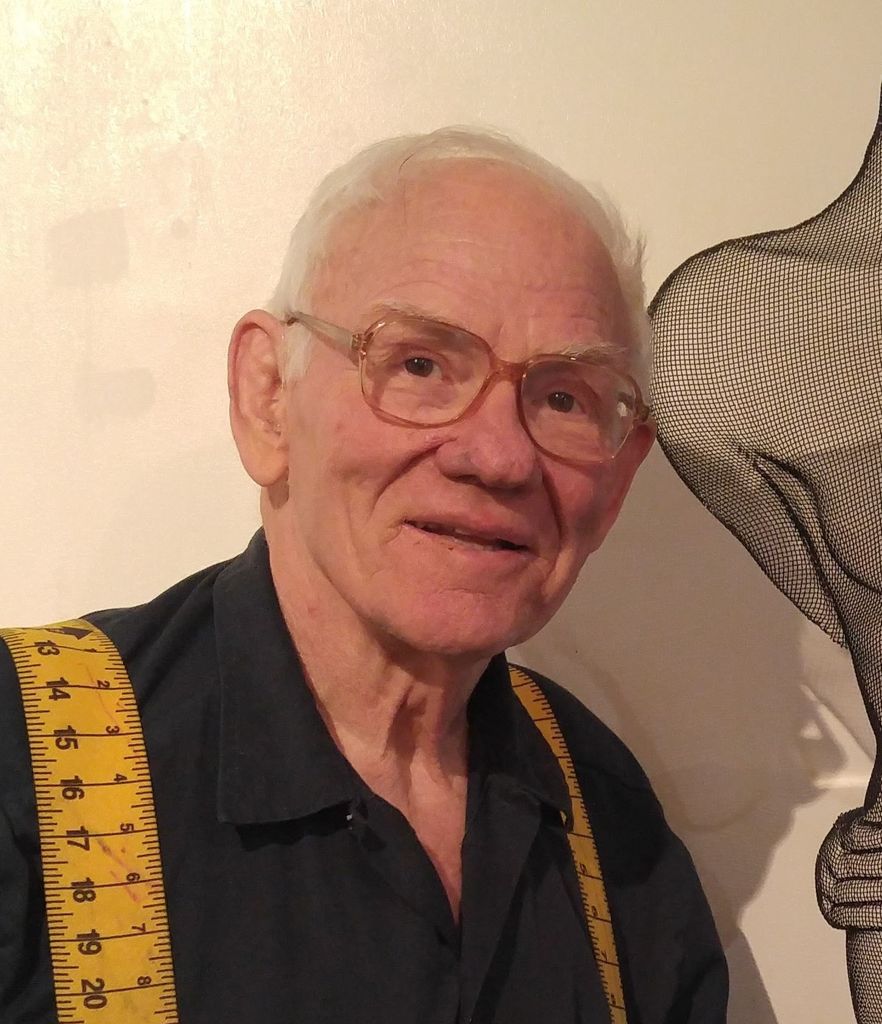
Cooper
September 23, 1942 — July 18, 2026
William Randall Cooper's Obituary
Randy Cooper
William Randall Cooper ("Randy"), 83, was born on September 23, 1942, in Mecca, California. The elder son of Vera Faye Cooper and Air Force pilot Major John Fielding Cooper, he spent his childhood in England, Okinawa, California, Florida, Texas, and Washington State.
Randy loved adventure from an early age. In Okinawa, he snorkeled and climbed Mount Fuji twice. After his family settled in Spokane, Washington, he became an Eagle Scout and developed a lifelong love of sports.
Wrestling became Randy's particular passion. A heavyweight champion in high school, he continued wrestling at Washington State University and later became a champion in Greco-Roman wrestling. He was invited to a training camp in preparation for the 1972 Olympics but was unable to attend for financial reasons. He continued wrestling competitively into his 40s.
In his 30s, Randy took up judo. Even as a white belt, he competed against black belts and, as the family story goes, was beating them so handily that they had to promote him to brown belt. Decades later, he took on yet another martial art: remarkably, Randy began taekwondo in his early 70s and earned a black belt. His willingness to take on something so demanding later in life reflected the determination and enthusiasm for learning that stayed with him throughout his life.
Football remained another lifelong love. Randy was a devoted Washington State Cougars fan and readily became a Packers fan after meeting his future wife, Susan Carol Brooks. She was from Wisconsin, so he had no choice.
Randy brought the same curiosity and determination to his working life. After joking that he had "majored in wrestling" during his first years at Washington State, he worked in construction and logging before returning to school. He earned a bachelor's degree and later a master's degree in education from the University of Idaho and taught math and special education.
He eventually began a second career in the nuclear industry, first as a radiation worker at the Idaho Chemical Processing Plant and later developing and teaching quality-management programs there and at the Waste Isolation Pilot Plant in Carlsbad, New Mexico. His work contributed to prestigious Westinghouse awards at both facilities.
But Randy's accomplishments were only one part of who he was. The roles that mattered most to him were husband, father, grandfather, and, eventually, sculptor.
At the center of Randy's life was his beloved wife, Susan. She was the love of his life, his soulmate, his rock, and his best friend. They were partners in life, love, work, and creativity, and their devotion to one another was evident to everyone who knew them.
Randy was a loving and present father. At a time when many fathers were far less involved in the day-to-day work of raising children, Randy was fully engaged in it. He cooked, cared for his children when they were sick, showed up, listened, helped, encouraged, and took an active part in the everyday life of his family.
One of the many things Randy helped give his children was a powerful example of what love could look like in practice. Through the way he cared for the people he loved, he showed that love was not simply something you felt or said; it was also something you did.
That same presence carried into his life as a grandfather. He cherished Willow, Adora, and Greyson and delighted in being part of their lives. He shared an especially close bond with Willow, who called him Baba. He was a constant presence in her life, and they genuinely delighted in one another. They brightened each other's lives.
Randy was also a writer of memoir and poetry and loved Toastmasters. He and Susan collaborated on the unpublished novel Moment of Death, based on his idea about a sculptor whose artistic technique becomes dangerously real, and they also worked together on a book about their love for one another.
While Randy was still working at WIPP, he took a community-education sculpture class that changed the course of his life. He had often complained that the artistic talent in his family seemed to belong only to his mother and his sister, Myra. At the end of the eight-week class, he came home and told Susan, "I know what I want to be when I grow up. I want to be a professional sculptor."
He was nearly 50.
Susan said, "Go for it."
Not long afterward, Susan accepted a job in Albuquerque that allowed Randy to devote himself to developing his artistic skills. There he discovered the medium he would ultimately make his own: wire mesh.
A self-taught sculptor and founder of Cooper Creations, Inc., Randy pioneered a distinctive form of sculpture he called shadow sculpture. Using carefully directed light, he transformed the sculpture itself and the shadow it cast into two interconnected works of art. In his hands, ordinary fireplace screen became graceful figurative sculpture and a new way of exploring form, light, and shadow. He developed not only his own artistic techniques, but many of the tools and processes he needed to turn wire mesh into the forms he imagined.
Randy became world-renowned for his shadow sculptures. For approximately 25 years, his work was represented and sold through galleries internationally, and his sculptures entered private collections around the world.
He also created several large-scale wire-mesh sculptures for the Natural History Museum of Los Angeles County, working on the project with his children Darin and Carol and his wife. Constructed to fit over fossilized skeletons, the sculptures help viewers imagine what extinct mammals might have looked like in life. They remain on permanent display as part of the museum's Age of Mammals exhibition.
His art reflected qualities that had always been part of him: curiosity, inventiveness, persistence, and a willingness to try something entirely new.
Randy was a loving, friendly extrovert who genuinely enjoyed people. He loved conversation, storytelling, laughter, and connection and made a conscious effort throughout his life to remain hopeful and positive. Whatever he chose to do, he did wholeheartedly.
During the later years of his life, Randy faced growing health challenges with characteristic determination. In 2010, he began walking every day, usually for at least 20 minutes, and continued for as long as he was physically able. That daily practice became deeply important to him and helped him manage many of his health challenges. He also faced skin cancer repeatedly and successfully underwent treatment for basal cell carcinoma. He celebrated more than 48 years of sobriety.
Parkinson's disease increasingly affected his health, however. In early July 2026, Randy developed a severe bacterial infection and was hospitalized. Despite intensive medical care, complications from the infection and his underlying illnesses became too much for his body to overcome. He died on July 18, 2026.
He is survived by his wife, Susan; son Darin and his wife, Morgen; daughter Carol Cooper-Fahrenkrug, her wife, Anna, and their daughter, Willow; son Ryan, his wife, Kelly, and their children, Adora and Greyson; and sister Myra Holmes.
He is also lovingly remembered by many extended family members, friends, artists, collectors, gallery owners, former students, fellow speakers, athletes, and others whose lives he touched.
Randy's life was a testament to creativity, discipline, curiosity, faith, love, and the deliberate pursuit of joy. His sculptures will continue to cast their shadows across walls around the world, but his greatest legacy lives in the people he loved, the family he built, and the countless lives made brighter by knowing him.
A lifelong Episcopalian and longtime member of the Cathedral of St. John in Albuquerque, Randy considered the cathedral his spiritual home. His funeral will be held there at 2:00 p.m. on Friday, September 4, 2026. His ashes will be interred at the cathedral. His family also plans to hold a memorial later in the year.
In lieu of flowers, donations in Randy's memory may be made to the Cathedral of St. John in Albuquerque, the Parkinson's Foundation, the Michael J. Fox Foundation, or Keshet Dance and Center for the Arts.
Randy Cooper will be deeply and forever missed. The world is a sadder place without him in it.
Funeral Services for William Randall Cooper
Memorial Service

Friday
The Cathedral of St. John
2:00 - 3:00 pm (Mountain time)
William Randall Cooper's Guestbook

Visits: 47
This site is protected by reCAPTCHA and the
Google Privacy Policy and Terms of Service apply.
Service map data © OpenStreetMap contributors